Prof BS Murty, Director, IIT Hyderabad, explored this question in the inaugural lecture of OpenLab, a new popular talk series that brings campus research closer to the institute community through engaging stories.
The talk took the audience on a journey from ancient metallurgy to cutting-edge materials research, highlighting all the ways in which materials have shaped society. Here are some snapshots from Prof Murty’s talk.
It is a material world
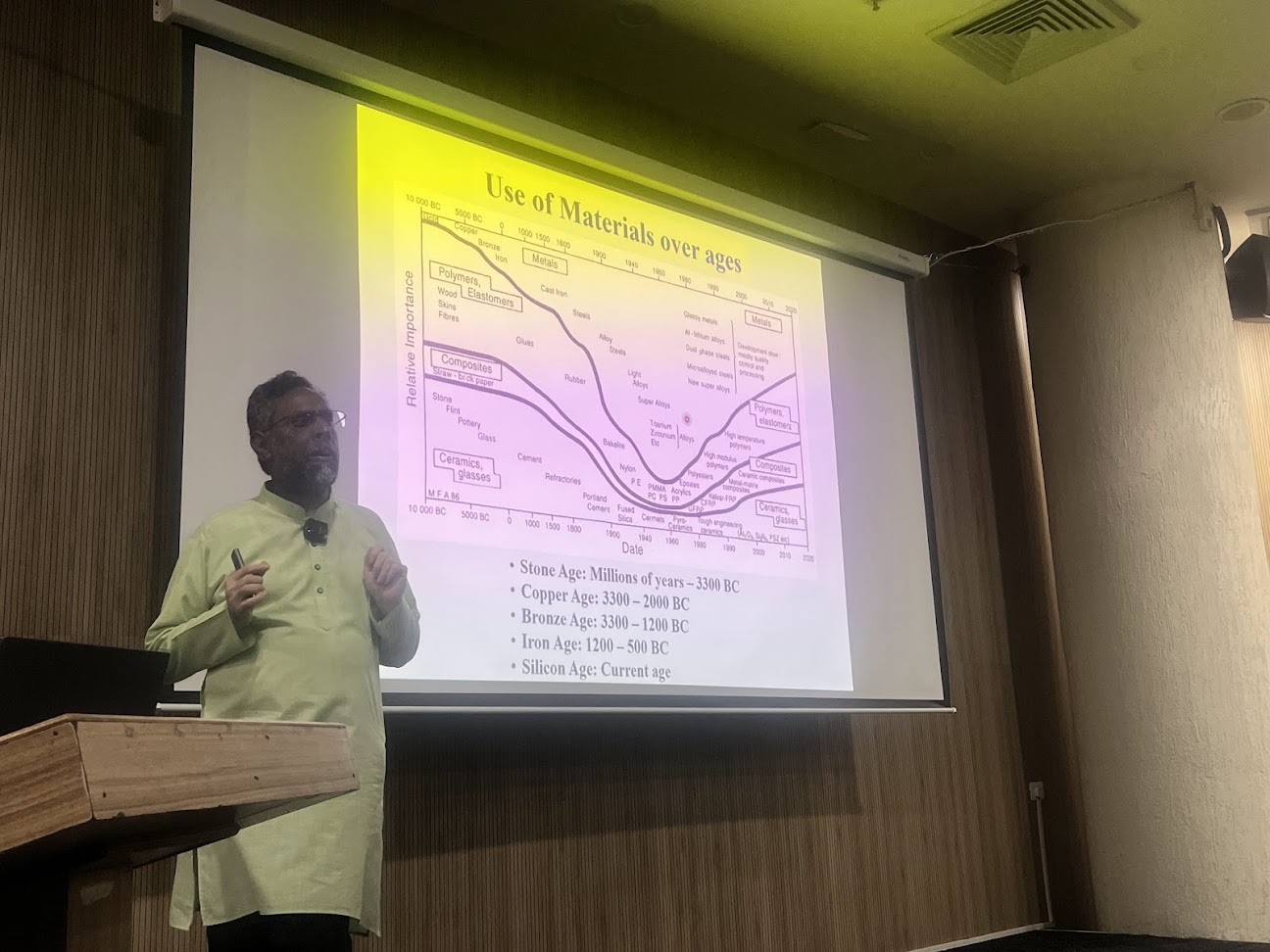
Materials have played an important role in shaping society, with various epochs of human history named after them, from Stone, Copper, Bronze and Iron Ages to the silicon age of today. Materials are intertwined with our everyday life, and they will shape our future, from space exploration to extraterrestrial habitation.
The quest for light and strong
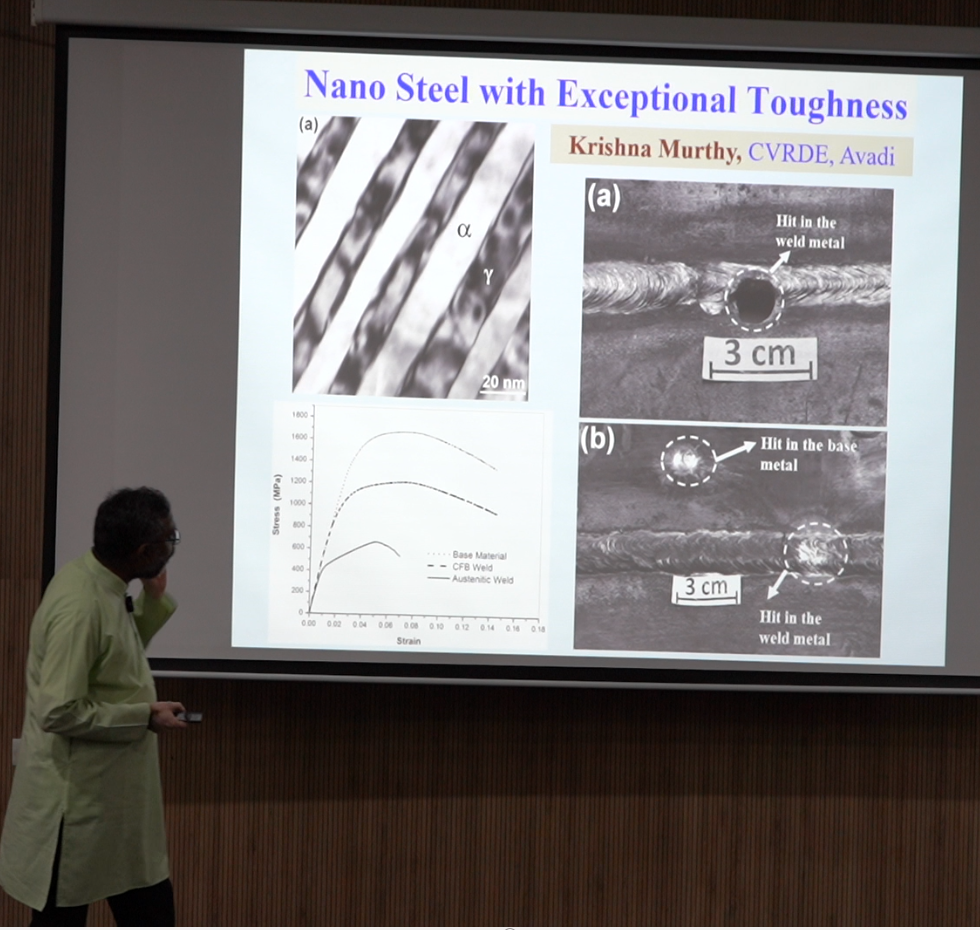
Scientists are constantly seeking to develop materials that are both light and strong. Advances in metallurgy have made steel several times stronger in the past few decades, enabling lighter vehicles and stronger armour. Today, AI tools are accelerating discovery by helping researchers quickly screen a large number of candidate alloys and composites.
Modern tools reveal ancient secrets
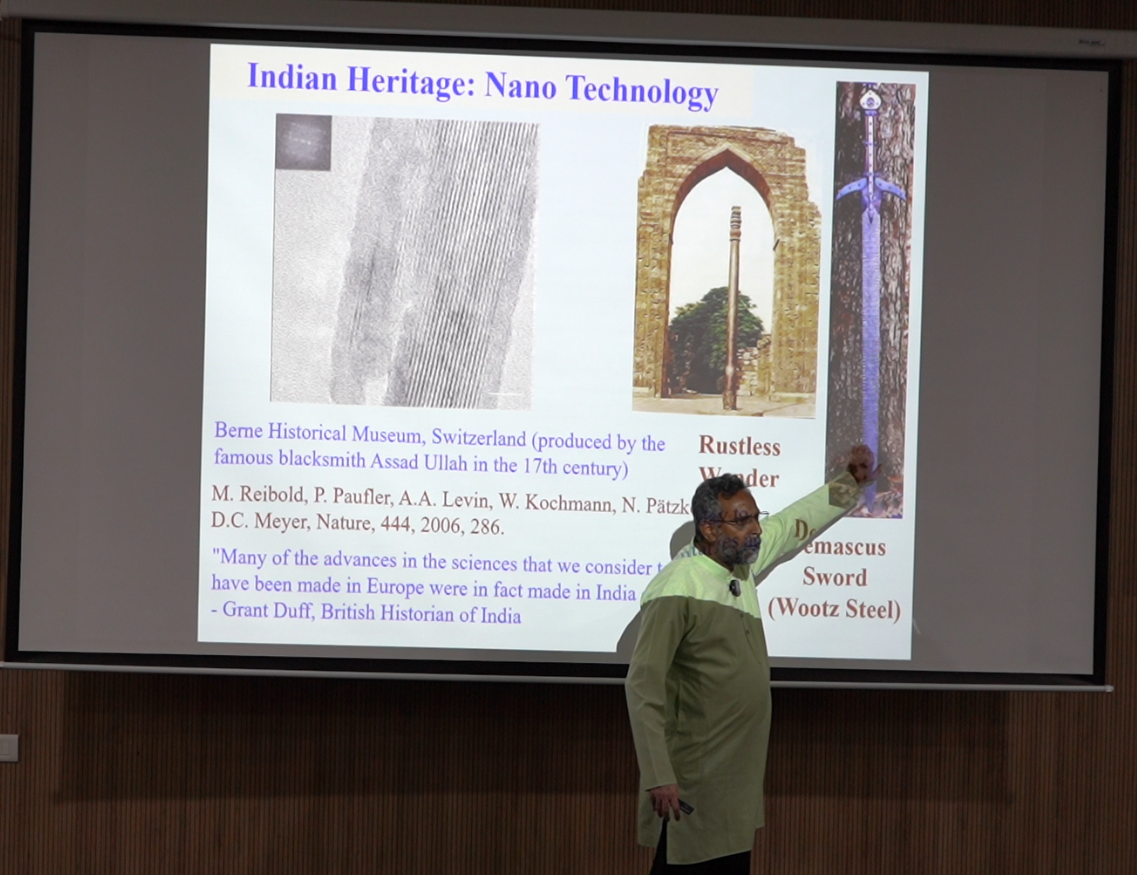
India has a long history of metallurgy, producing Wootz steel, which was extensively traded and used to forge the famed Damascus swords more than two thousand years ago. Recent studies using advanced microscopy have revealed microstructures in the material, offering clues to its high strength and ductility.
The magic lies at the nanoscale
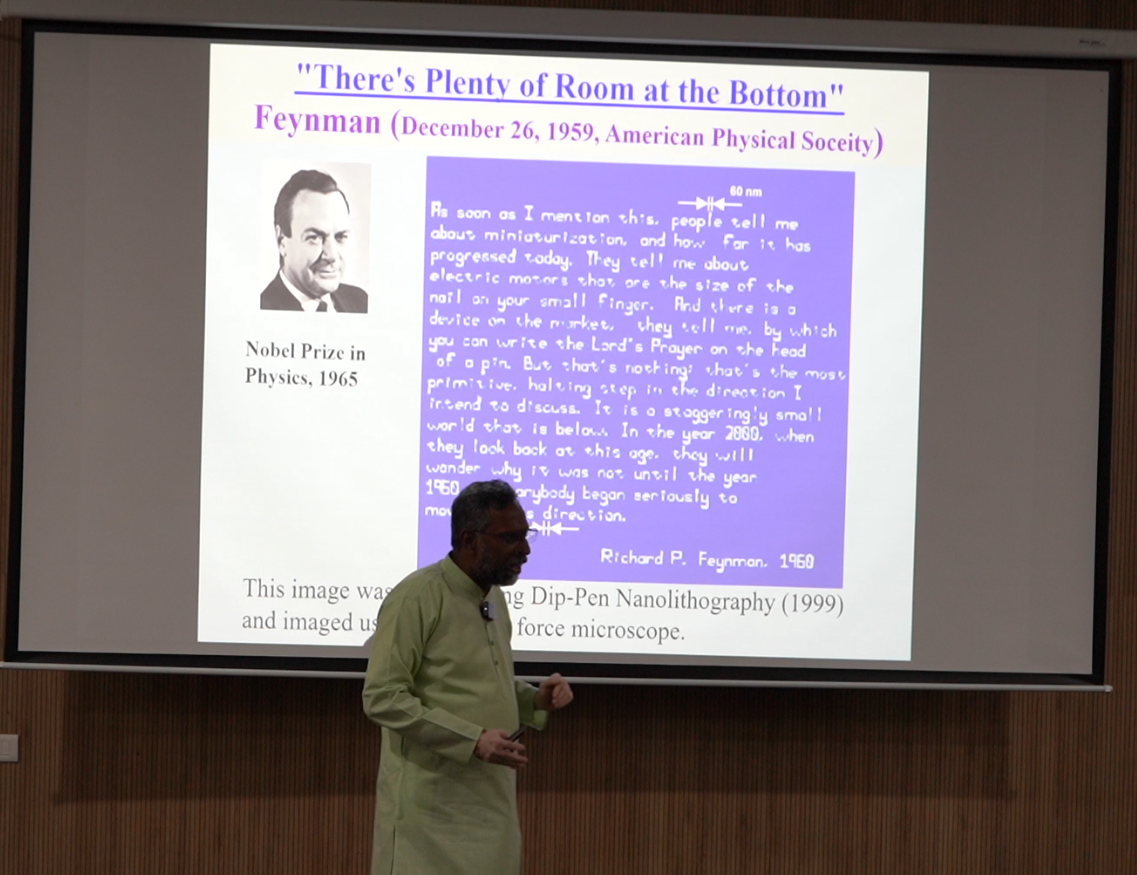
How materials are arranged at the smallest scales has a huge impact on their macroscopic properties, such as their response to heat and mechanical forces. By engineering materials at the nanoscale, researchers are creating extraordinary materials, from aerogels that withstand temperatures over 1500°C, and carbon nanotube structures with astounding load carrying capacity.
Seeing atoms using powerful microscopes
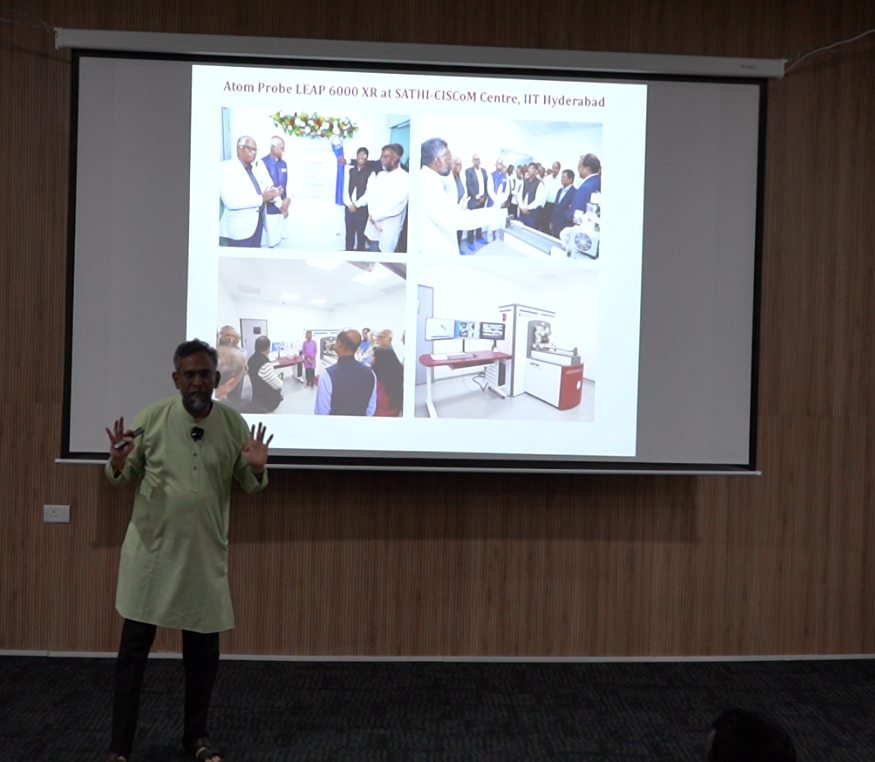
IIT Hyderabad houses an one-of-a-kind atom probe microscope that can image individual atoms, allowing researchers to study materials at an unprecedented resolution. The SATHI-CISCoM centre offers training in these cutting-edge tools, allowing researchers to access them remotely and perform experiments from anywhere in the world.
From atoms to the future
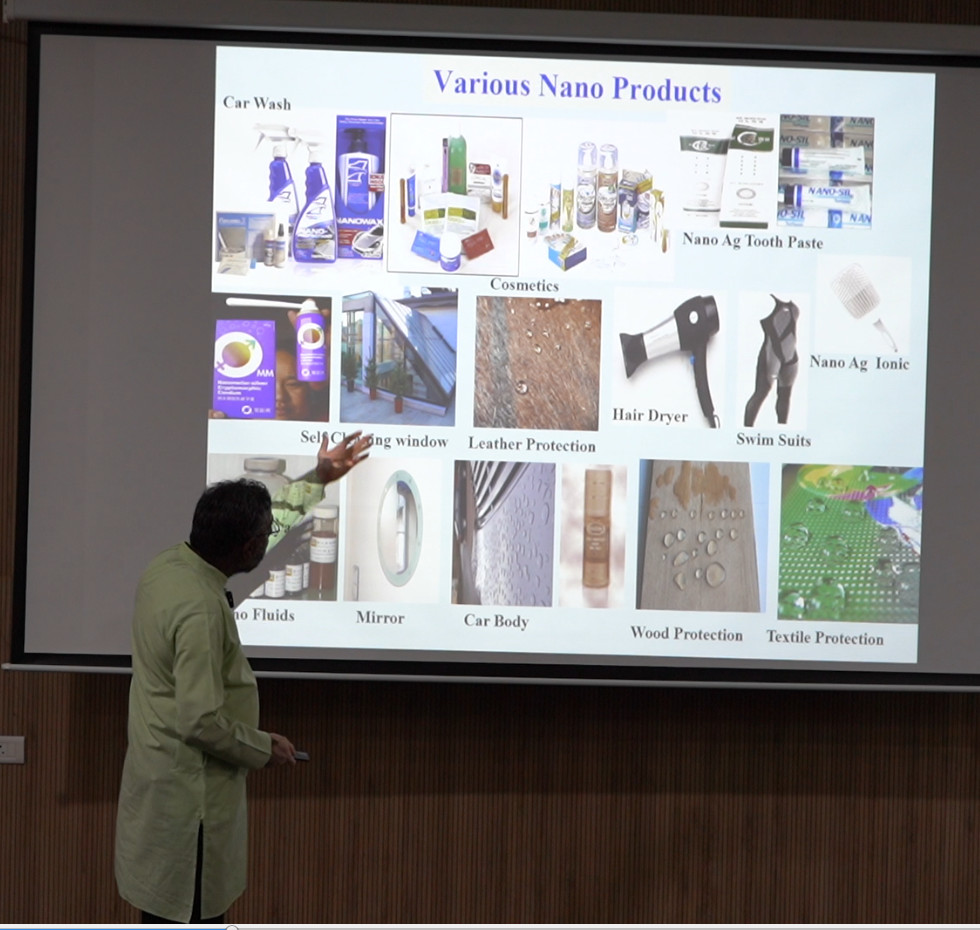
Materials science is improving the fuel efficiency of cars, ensuring that our flights land safely, allowing spacecrafts to deliver bigger payloads, innovating medical devices in healthcare, and helping design efficient electronics and wearables. Research at IIT Hyderabad is contributing to several of these fields, helping develop the technologies of tomorrow.
MSME
#openlab#popular talk#materials science#metallurgy#science and society