When Vivek Yadav was in school, he was fascinated with rockets and outer space. “I didn’t really know what aerospace engineering was, but I knew I wanted to do something in it,” he says. Chasing these childhood dreams, he decided to pursue a Bachelor’s degree in the field, and was captivated by propulsion, the burning of fuel that drives rockets.
However, Vivek realised that he may have little choice in the projects he worked as an employee of a larger organization. “I wanted to launch a startup because I love working on engines, and I wanted to work on what I want,” he says. That is how he found his way to IIT Hyderabad.
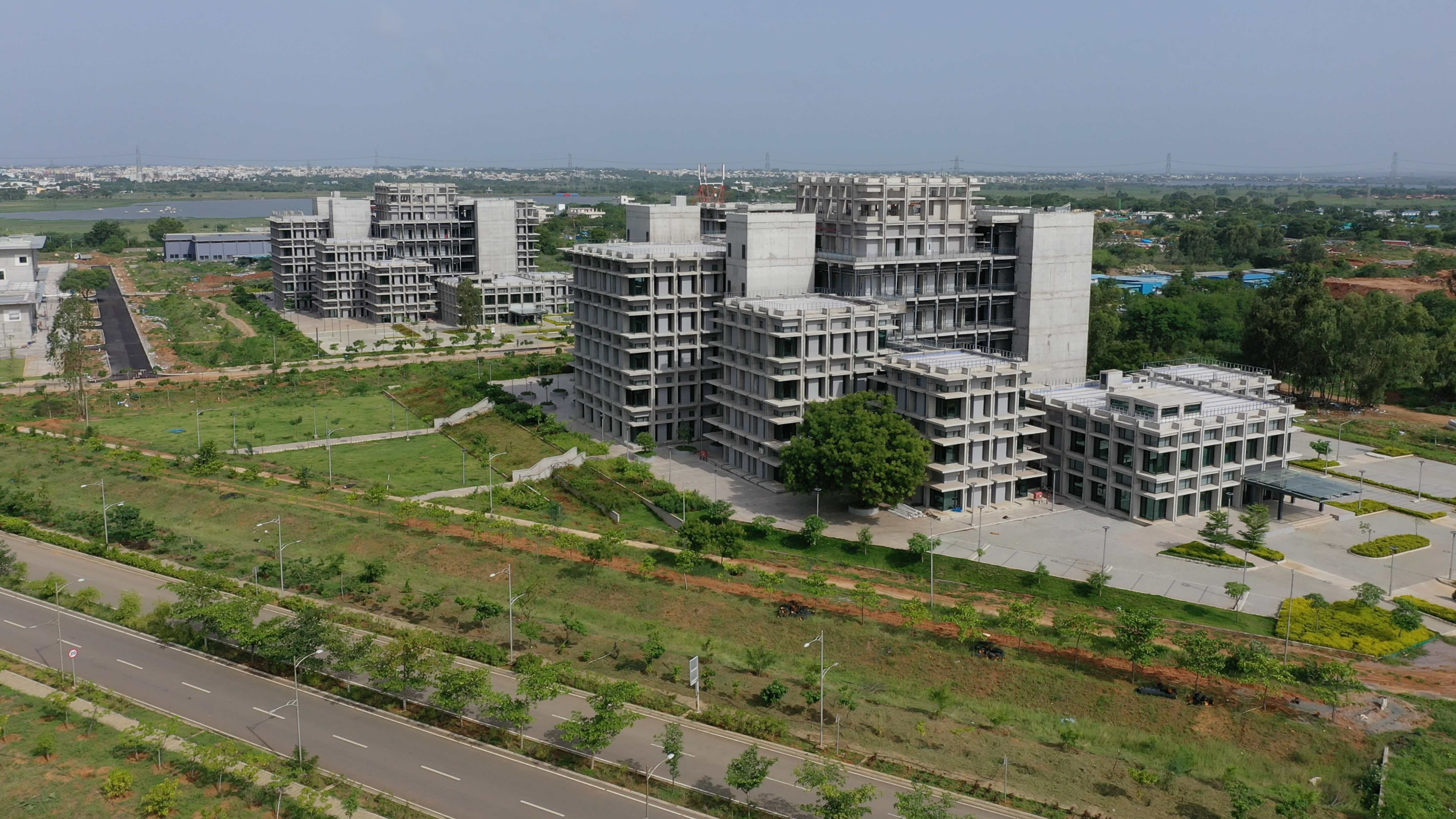
The Indian Institute of Technology Hyderabad has a diverse innovation ecosystem that encourages entrepreneurship across disciplines. Its incubation centers support over 300 startups, many of which are working on important societal challenges. But it doesn’t stop there. The institute is fostering innovation among young students by providing funding, skill training, mentorship, and advanced research facilities.
There are several initiatives at IITH that encourage student innovation at different levels. First year undergraduate students fresh out of school can apply to the BHARATI program and work on hands-on engineering projects. The institute offers an MTech program that has formalised training in entrepreneurship skills with a unique blend of coursework, and unconventional thesis requirements. The BUILD program funds students across disciplines to transform their ideas into prototypes. Together, these initiatives act as a springboard that can launch students into the incubation ecosystem, where they work on developing products for the market.
Catching them young
The latest in the initiatives to encourage student innovation is the BHARATI (Bold Hearted Aspirants RAising to Transform India) program.
“Our Director, Prof BS Murty, launched this initiative to support BTech students in building working prototypes across various fields,” says Dr Shourya Dutta Gupta, who is the faculty in charge of the program. It provides every first-year student with the opportunity and funding to work collaboratively on a project in groups of six to eight, under the guidance of a faculty mentor. “The idea is to motivate students to be builders and innovators at an early stage.”
“I wanted to demonstrate that we can develop a ballistic facility that can throw projectiles at very high velocities,” says Dr SK Karthick, from the Department of Mechanical and Aerospace Engineering (MAE). “But building one is a very costly affair.” With a motley bunch of undergraduates, enthusiastic student mentors, and Rs 50,000 in funding from the BHARATI program, the team built a proof-of-concept from scratch.
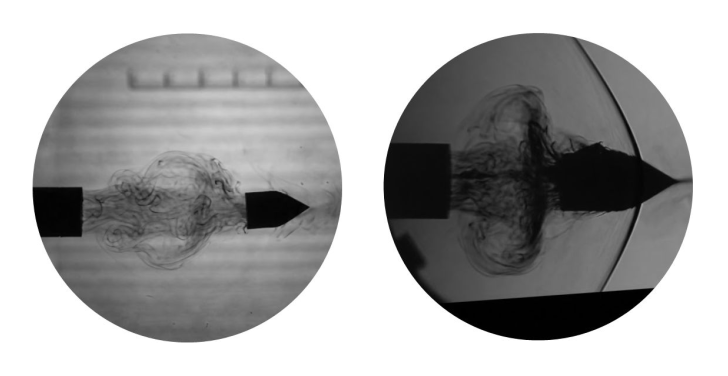
Sanitary pipes lying around construction sites inspired them to build a low cost gun which uses pressurized helium to propel a projectile to speeds eight times faster than a Formula One car. Along the way, students systematically improved its efficiency, designed an electronic device to measure high velocities, and built a trap to contain the projectile. At the end of it, they also became experts in plumbing leaky joints.
The low-cost light gas gun built by the team has applications in ballistics research and launching satellites, says Dr Karthick. “I hope the students have learnt something interesting that they can follow through in their undergraduate studies.”
Giving structure to ideas
Vivek wove his way into this innovation tapestry through the MTech program in Techno-Entrepreneurship offered by the Department of Entrepreneurship and Management (EM). “What is unique about the program is that we push the students to bring out a proof-of-concept and a business model at the end of their second year, putting into use their background and interests,” says Dr Lohitaksha M Maiyar, who heads the department.
Unlike conventional Masters programs, the end goal is not limited to publishing a research paper. The department encourages students to seek multiple sources of funding to support their projects, and participate in international competitions to showcase their work. “In the four years since the program began, we have registered five to six startups and we recently got our first patent by a student.”
Every student in this MTech program has two mentors, a faculty from the Department of Entrepreneurship and Management, and a second from another department who offers technical support related to the project. So far, students have worked on projects ranging from unmanned vehicles in agriculture, mobile workstation pods, automating pharmaceutical compliance, avatar-based healthcare assistance, among many others.
Currently in the second year of the MTech program, Vivek is working on his project from a lab tucked away at the end of a shaded corridor in the Technology Innovation Park. In the middle of this room there is a table crowded with engine parts, heavy-duty gloves, a disembodied pressure gauge, a bright orange tool box, and metal joints and spanners of various sizes. There are desktop computers at one end, facing which is a whiteboard with a sketch of a high-capacity reusable rocket.
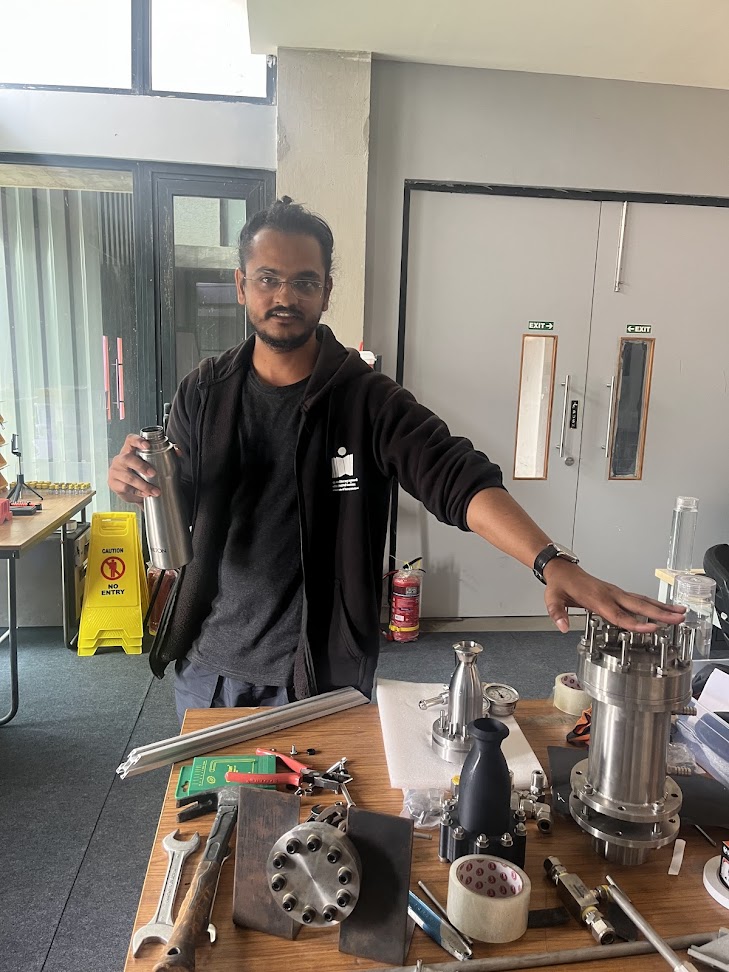
“Rockets can be categorized based on the payload they can deliver to space. Compared to other nations, India currently does not have rockets that can take big payloads into space,” says Vivek. Vivek’s long-term goal is building a rocket that can deliver heavy cargo to space and autonomously return to earth to be used again.
“India is moving towards human missions, space stations and launching multiple satellites simultaneously. This is where high payload capacity becomes important,” explains Dr Vishnu R Unni from MAE who co-advises Vivek along with Dr Rajesh Ittamalla (EM) and Dr Gnanaprakash K (MAE).
Bringing ideas to life
During his first year at IITH, Vivek came across the BUILD (Bold and Unique Ideas Leading to Development) project, which offers up to one lakh rupees to IITH students to help them create prototypes of their ideas. “That was a turning point,” he says.
“We have been actively running the BUILD program for five years, where students pitch a mix of both software and hardware related projects for funding up to Rs 1 lakh,” says Dr Srikar AVR from the Department of Design who is the faculty in charge of BUILD. “We get around 100 applications per cohort, and shortlist 20-30 of these,” with projects ranging from models for swarm robots to healthcare applications in regional languages.
“The trend we are seeing is that, given the access to AI tools, students are working on software-related products, though we also emphasize hardware development,” says Dr Srikar. “We are also restructuring ourselves to see how we can allot these grants for unconventional ideas, and engage the community to be more human-centric.”
Students across departments and academic levels can apply to the BUILD program, and “projects are more successful when students work in multidisciplinary groups,” says Dr Srikar. “It is an opportunity for them to form connections early in life.”
As a BTech fresher, Pushpendra had an early taste of entrepreneurship at the Suzuki Innovation Centre at IITH, which facilitates knowledge exchange between India and Japan. “The program helped me look at things from the perspective of a team rather than as an individual,” he says, who is now in his final year in Civil Engineering.
Pushpendra and six other students obtained BUILD funding to create a prototype of an e-commerce platform called Mandi Hub, where farmers can showcase their produce and directly sell to consumers. Mentored by several faculty, including Dr Satish Kumar Regonda who heads the Rural Development Cell, the team worked with farmers, consulted officials at the Krishi Vigyan Kendra in Medak and even showcased their app at a district farmer’s summit. Their project secured additional funding and also traveled to an entrepreneurship event in Japan.
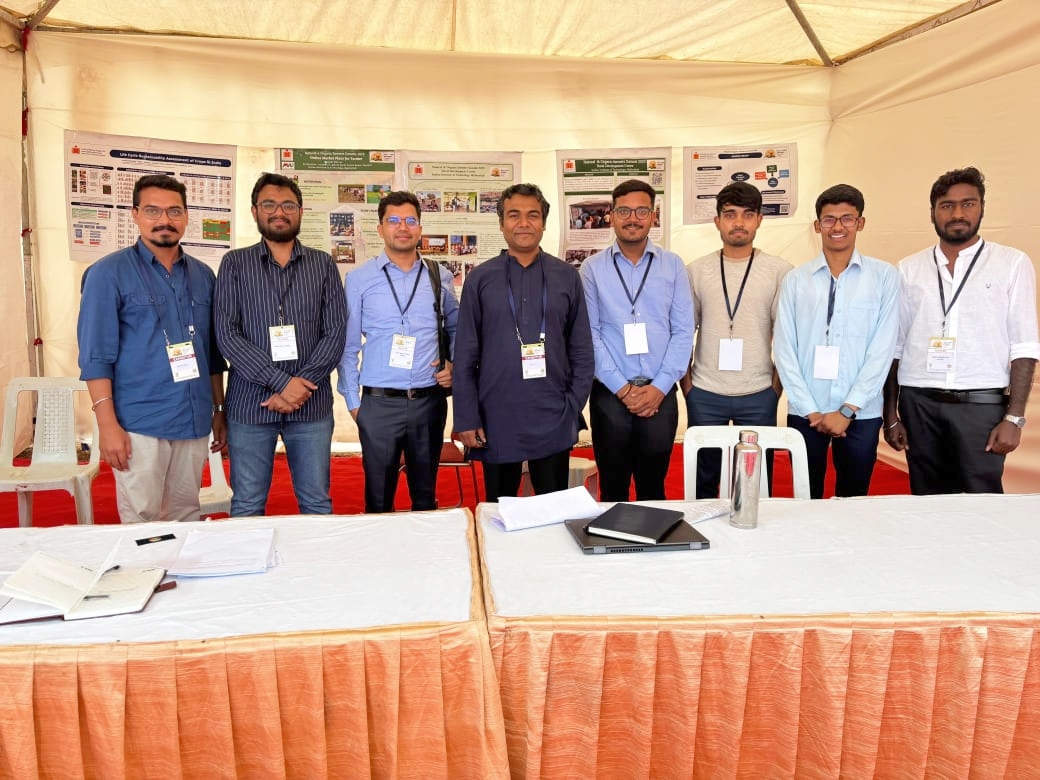
“Some are able to navigate and track additional revenue to get more funds to experiment,” says Dr Srikar. Soham Bhar, a second year student in the MTech in Techno-Entrepreneurship program, received additional funding under the DST NIDHI-Entrepreneur-in-Residence program along with early support from BUILD.
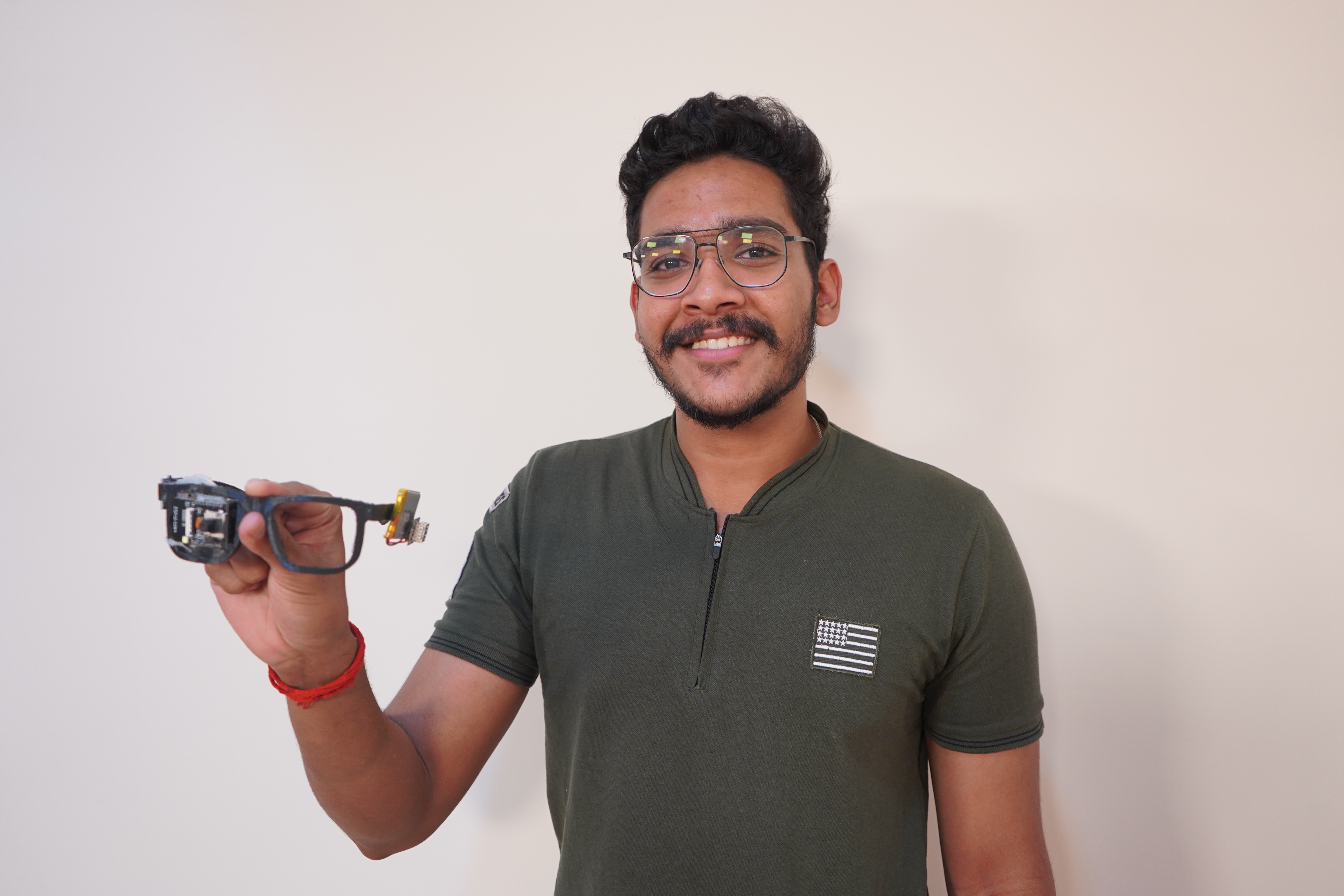
Mentored by Dr Jayshree Patnaik and Dr Nagarajan Ganapathy, he is improving a prototype of voice-controlled smart eyeglasses for people with visual impairment, which can detect obstacles and read text. “The devices that are currently available in the market are very expensive, and do not address the primary needs of people with visual impairment, which motivated me to build a device that is affordable to many and serves them better,” says Soham.
Incubating innovation
In the course of working on the BUILD project, Vivek received additional grants from the Director, and DST’s NIDHI-PRAYAS scheme disbursed by the iTIC incubator at IITH.
“iTIC is a deeptech incubator of IITH and the startups it incubates and we support startups at various stages of innovation,” says Dr Vishnu, who is the faculty in charge of the incubator.
iTIC also supports students to build a proof of concept through the BUILD program, which can be converted into a prototype through various government schemes. It also has a prototyping center, iLAB, with multiple fabrication facilities (milling machine, laser cutter, 3D printing etc), which students can use to build models and fabricate components. After demonstrating a minimum viable product, they can register a startup in one of the four incubators on campus. “The institute has a large mentor pool that startups can interact with, and has invested in many testing facilities, which is very unique to academic incubators like us,” adds Dr Vishnu.
Using his recently acquired funding, Vivek plans to build a prototype of a small rocket designed to lift off to a hundred meters and land autonomously. Over the last few months, he has been focusing on some crucial aspects – the choice of fuel and oxidiser, the type of fuel injector, and material and design of the engine incorporating safety factors.
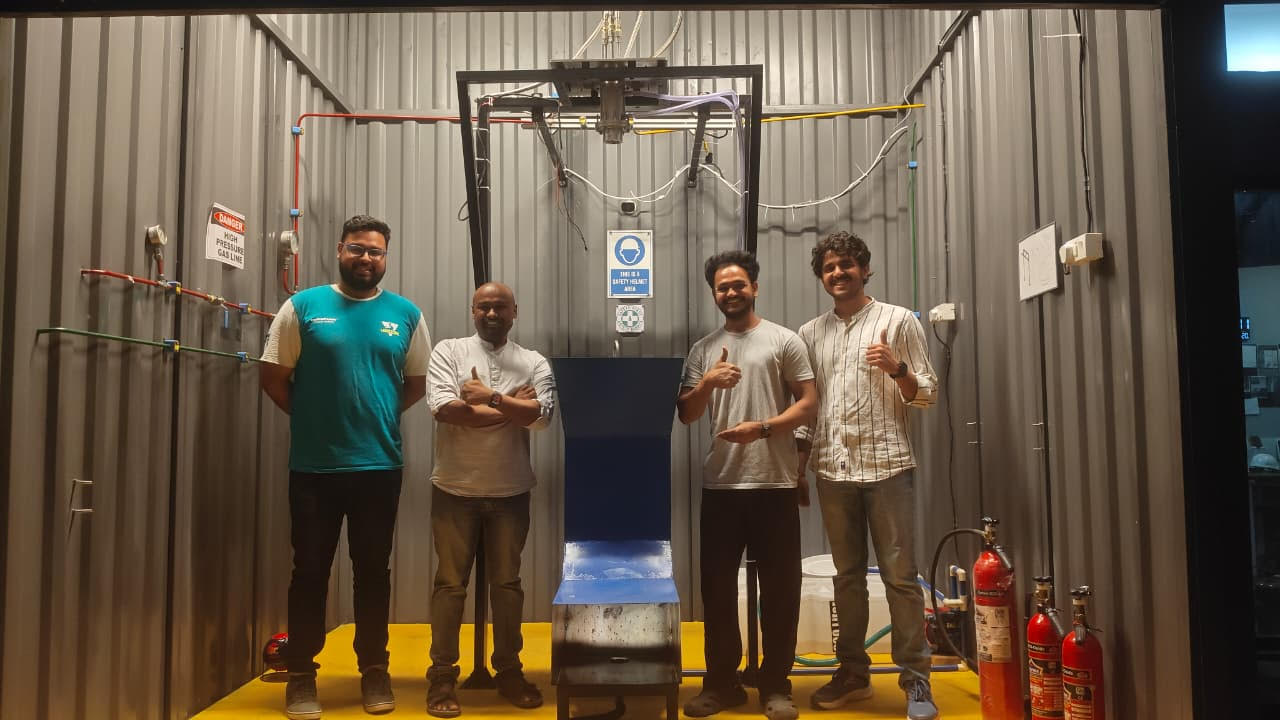
On 20 March, Vivek and team carried out a static fire test in an enclosure they set up in an open area outside the lab. Here, they secured the engine and ignited it to check if the fuel mixture burned as intended. The test was a success, allowing them to measure the thrust generated by the engine and compare it with theoretical calculations.
“This is a critical step,” Vivek says, about this key milestone in building a high-capacity reusable rocket that fuels his dreams.
The article was updated on 26 March 2026.